
Food Hygiene Training and the Forgetting Curve
I had a great chat with Richard Sprenger the other day, and he mentioned the forgetting curve; I realised I had almost forgotten it! So, I thought I would do some revision and share.
What Is the Forgetting Curve?
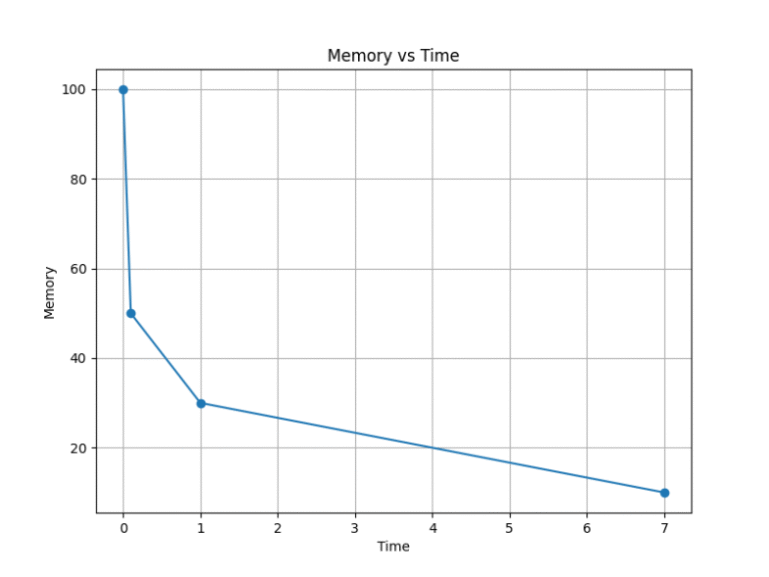
The psychological phenomenon known as the Forgetting Curve was first described by German psychologist Hermann Ebbinghaus in the 19th century. Quite simply, the Forgetting Curve illustrates how information is lost over time when there is no attempt to retain it.
Ebbinghaus found that:
- Within just an hour people forget around 50% of information
- Within 24 hours, people forget up to 70% of new information.
- After a week, people have forgotten 90% or more
The Forgetting Curve: What It Means for Food Hygiene Training
We know in the world of food hygiene that training is essential and is a legal requirement in most countries, one way or another. But bang for buck – how much of it actually sticks?
We may have ticked a box that annual food hygiene training has been completed, but if after a week only 10% is retained, is that a satisfactory outcome? Understanding this curve maybe could help us design new ways to ensure food hygiene training leads to lasting behavioural change. Of course, if the training is a refresher on a previously learned (and forgotten) course, then there is a chance that things could improve second time round on the retention side.
But if this knowledge fades so quickly, will people revert to unsafe practices potentially putting the business and customers at risk?
Making it stick
Richard and I discussed some ways in which we can help the messages to stick.
I mentioned to Richard that I am re-learning French with the help of Duolingo; the app puts pressure on you to practise every day – and guess what, if I miss a few days, then I find I have forgotten a few words and phrases. I’m glad it’s not an old age thing, it is a scientifically proven fact that we need to keep on with our studies!
However, it is not just a case of making sure people learn the facts – I have lots of discussions about the application and practice of hygiene knowledge in hygiene with my colleague at IFH, Professor Sally Bloomfield, as we have uncovered another issue – comprehension of hygiene doesn’t necessarily lead to practising the correct hygiene measure when faced with a scenario where hygiene needs to be applied. Results of this study are currently under peer review for publication.
We often talk about how great it would be if hygiene became second nature just in the same way we put our seat belts on – why remember that but forget to wash hands after handling raw chicken?
Learning and retention: Reinforcement Is Key
I think that to combat the Forgetting Curve, training must be reinforced regularly. Here are some ideas:
1. Microlearning
Short, focused refreshers—like a 2-minute video on hand hygiene—can help reinforce key messages without overwhelming staff. A tablet on the wall playing a loop in the cloakroom may help, particularly if the video is changed every day.
2. Visual Reminders
Posters, stickers, and signage in kitchens and food prep areas serve as constant cues to reinforce training, but people can become poster blind.
3. Interactive Tools
Quizzes, games, and scenario-based learning can improve engagement and retention. This is why Duolingo is so successful.
4. Peer-to-Peer Learning
Encouraging team members to share best practices or mentor new staff helps embed hygiene culture.
5. Regular Audits and Feedback
Routine checks followed by constructive feedback help reinforce correct behaviours and correct mistakes early. We used to carry out coaching audits, where at the end of the audit not just the manager but all the staff were gathered for feedback, as well as this occurring as the audit progressed.
These are just a few ideas – I am sure others will have thought of many more!
Hygiene Culture
Training isn’t just about ticking boxes—it’s about creating a culture of hygiene. When staff understand why hygiene matters and see it reinforced daily, they’re more likely to adopt safe practices long-term.
Final Thoughts
The Forgetting Curve reminds us that learning is not a one-time event. In food hygiene, where the stakes are high, we must move beyond traditional training models and embrace continuous learning. By doing so, we protect not just our businesses but also the health of our customers
Ebbinghaus’ Forgetting Curve (Original Research & Replication)
Murre, J.M.J., & Dros, J. (2015). Replication and Analysis of Ebbinghaus’ Forgetting Curve. PLOS ONE, 10(7), e0120644.
https://doi.org/10.1371/journal.pone.0120644


